
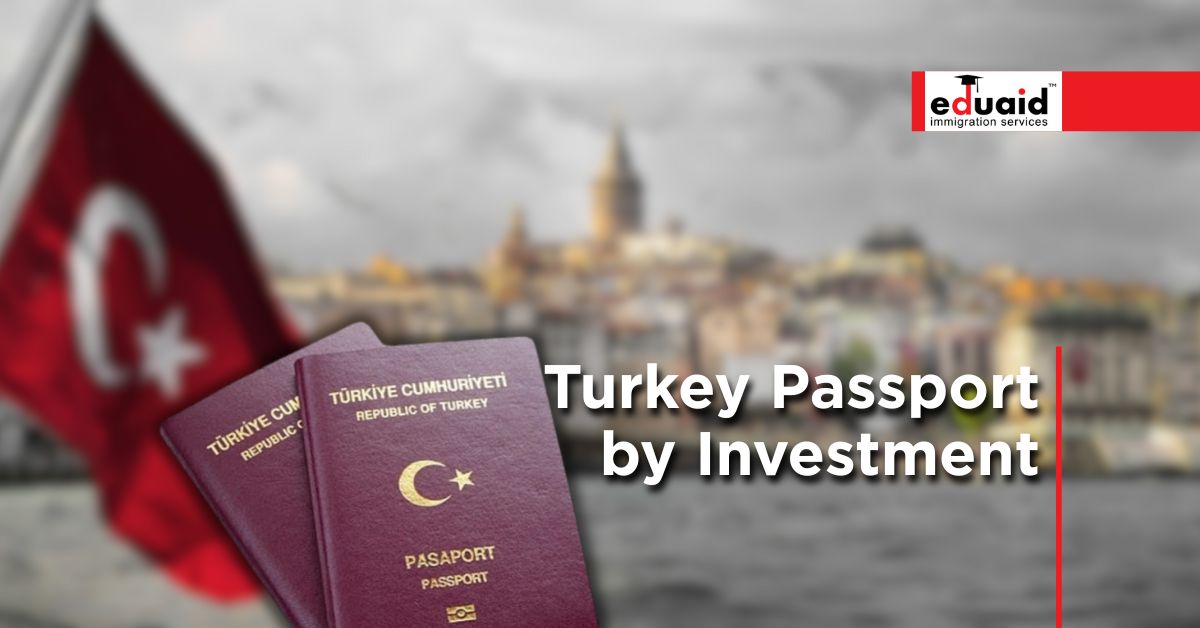
The Turkey passport by investment program has become one of the most popular citizenship-by-investment options globally, especially for investors from Asia, the Middle East, and Africa. It offers a clear legal pathway to obtain full Turkish citizenship by making a qualifying investment, without long residence requirements or complex point systems.
As of 2026, the program continues to attract high-net-worth individuals and business owners looking for global mobility, asset diversification, and a second passport with strong regional and international value.
This guide explains how the Turkey passport by investment works, the latest requirements, eligible investment options, timelines, and who this program is best suited for, based on current regulations and official practices
What Is the Turkey Passport by Investment Program?
The Turkey passport by investment program was launched under Turkish Citizenship Law Article 12 and allows foreign nationals to obtain Turkish citizenship by making a government-approved investment.
Successful applicants receive:
- Full Turkish citizenship for life
- A Turkish passport
- The same rights as native-born citizens
The program is regulated by the Turkish government, and applications are processed through official ministries and land registry offices.
Key Benefits of Turkey Passport by Investment
Here are some of the top benefits of the Turkey passport by investment program.
Visa-Free Travel
Turkish passport holders can travel visa-free or with visa-on-arrival access to over 120 countries, including Japan, South Korea, Singapore, and most of Latin America.
Eligibility for the US E-2 Investor Visa
Turkish citizens are eligible to apply for the US E-2 Investor Visa, making Turkey a strategic second passport for entrepreneurs targeting the US market.
No Mandatory Residency Requirement
There is no obligation to live in Turkey before or after obtaining citizenship. Applicants can complete the process remotely with legal representation.
Family Inclusion
The main applicant can include:
- Spouse
- Children under 18
All included family members receive citizenship simultaneously.
Dual Citizenship Allowed
Turkey permits dual citizenship, so applicants do not need to renounce their current nationality, subject to their home country’s laws.
Read More: Benefits of Turkish Citizenship by Investment
Investment Options for Turkey Passport by Investment
As of 2026, applicants can choose from several qualifying investment routes.
Real Estate Investment (Most Popular Option)
- Minimum investment: USD 400,000
- Property must be held for at least 3 years
- Can be residential or commercial
- Multiple properties allowed if the total value meets the threshold
This option is favored due to strong rental demand and resale potential in cities like Istanbul, Ankara, and Antalya.
Bank Deposit
- Minimum deposit: USD 500,000
- Funds must remain in a Turkish bank for 3 years
Capital Investment
- Minimum fixed capital investment: USD 500,000
- Approved by the Ministry of Industry and Technology
Government Bonds
- Minimum investment: USD 500,000
- Held for at least 3 years
Step-by-Step Process to Get Turkey Passport by Investment
Check the steps of getting a Turkish passport by investment below.
Step 1: Choose Investment Route
Select the most suitable option based on your financial goals, liquidity needs, and risk profile.
Step 2: Complete the Investment
For real estate, the property must be officially valued and registered with a citizenship annotation at the land registry.
Step 3: Obtain Certificate of Eligibility
The relevant authority issues a certificate confirming that your investment qualifies for citizenship.
Step 4: Apply for the Residence Permit
A short-term residence permit is required as a procedural step, even though long-term residence is not mandatory.
Step 5: Submit Citizenship Application
The citizenship file is submitted to the Directorate General of Population and Citizenship Affairs.
Step 6: Approval and Passport Issuance
Once approved, applicants receive Turkish ID cards and passports.
Processing Time and Timeline
The Turkey passport by investment process is known for its efficiency.
Typical timeline is as follows:
- Investment and documentation: 2 to 4 weeks
- Citizenship review and approval: 6 to 8 months
- Passport issuance after approval: 1 to 2 weeks
In most cases, applicants receive their Turkish passport within 6 to 9 months.
Costs to Consider Beyond the Investment
In addition to the minimum investment amount, applicants should budget for:
- Legal and government processing fees
- Property valuation and land registry fees
- Translation and notarization costs
- Passport and ID issuance fees
These costs vary depending on family size and investment structure.
Is the Turkey Passport by Investment Safe and Legal?
Yes. The Turkey passport by investment program is fully regulated under Turkish law and administered by multiple government authorities, including the Ministry of Interior, Land Registry Directorate, and Population and Citizenship Affairs Directorate. It is not a discretionary or quota-based program, which means applications are assessed strictly on eligibility and compliance rather than competition.
That said, the safety of the program depends heavily on how the application is structured. The Turkish government places strong emphasis on source-of-funds verification, property valuation accuracy, and legal ownership records. Even when the investment threshold is met, inconsistencies in banking documentation, unofficial property appraisals, or errors in title deed registration can lead to delays or rejection.
Applications must meet:
- Source of funds verification
- Accurate property valuation
- Correct title deed registration
- Clean criminal record requirements
Applicants who work with licensed immigration lawyers and government-approved valuation firms typically experience smoother processing. From a legal standpoint, once citizenship is granted, it is permanent and protected under Turkish constitutional law. It cannot be revoked unless citizenship was obtained through fraud or material misrepresentation, which reinforces the importance of full compliance from the outset.
Also Read: Turkish Citizenship from Bangladesh
Who Should Consider the Turkey Passport by Investment?
This program is particularly suitable for:
- Business owners seeking global mobility
- Investors looking to diversify assets internationally
- Families wanting a stable second citizenship
- Entrepreneurs planning future US E-2 visa applications
- Individuals from countries with limited travel freedom
Common Mistakes to Avoid
- Buying undervalued or ineligible property
- Using unofficial property valuations
- Transferring funds without proper banking records
- Working with unlicensed intermediaries
These issues can lead to delays or rejection, even if the investment amount is met.
Frequently Asked Questions
Q: Can I sell my investment after getting Turkish citizenship?
Yes, but the investment must be maintained for a minimum of three years. Selling or liquidating the asset before this period ends can result in the cancellation of citizenship.
Q: Do I need to live in Turkey after receiving the passport?
No residence or physical presence is required before or after citizenship approval. Applicants are free to live anywhere without affecting their status.
Q: Are adult children eligible under the same application?
Only children under the age of 18 can be included as dependents. Adult children must apply independently through their own investment.
Q: Is Turkish citizenship permanent?
Yes. Once granted, Turkish citizenship is lifelong and can be passed on to future generations, provided it was obtained lawfully.
Final Thoughts
The Turkey passport by investment program remains one of the most balanced options in the global citizenship landscape. It combines a relatively accessible investment threshold with fast processing, family inclusion, and long-term strategic benefits.
When structured correctly and handled through compliant legal channels, it offers both a strong second passport and a tangible investment opportunity. If you are considering this pathway, professional guidance is essential to ensure accuracy, compliance, and long-term value.
Disclaimer: All information is provided as a general guide only and does not constitute legal advice. It is important to note that immigration policies and operational practices are subject to sudden and unexpected changes.