
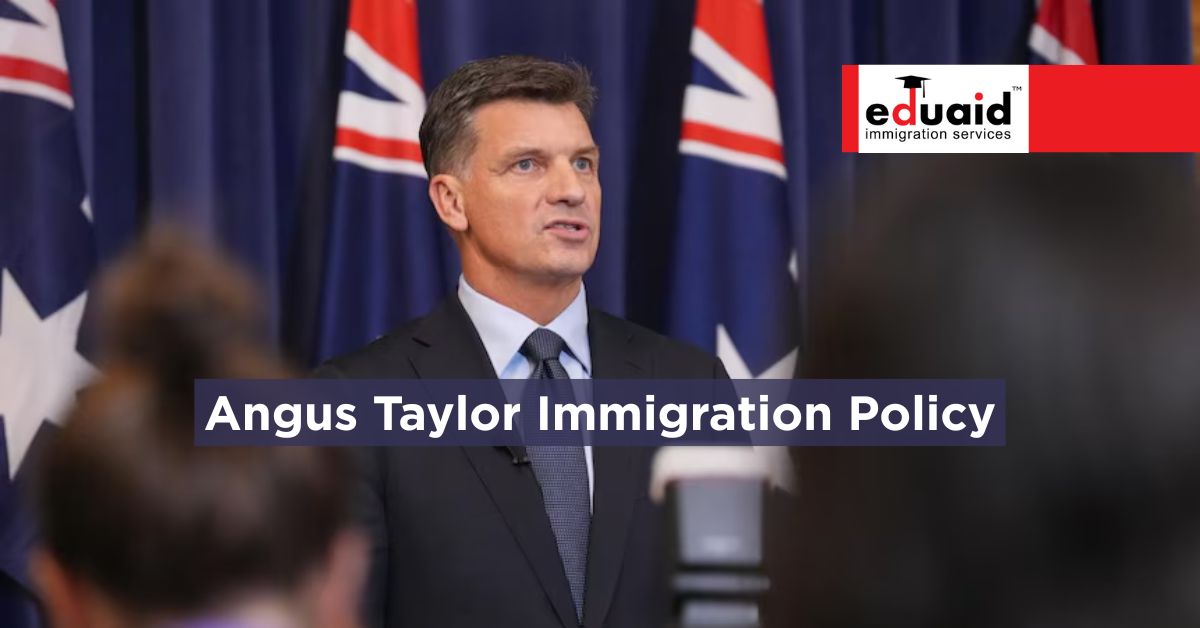
Australia’s migration debate has entered a new phase following statements from Angus Taylor immigration policy discussions this week. After becoming leader of the Liberal Party of Australia, Angus Taylor outlined a proposed recalibration of Australia’s migration settings, arguing that intake levels must better align with housing supply, infrastructure capacity, and economic productivity.
According to international immigration media outlets, Taylor’s position centres on reducing overall migration numbers while prioritising skilled entrants who directly contribute to economic growth.
While no legislative changes have yet occurred, the announcement signals that immigration will be a key policy battleground ahead of the next federal election.
Lower Migration Intake on the Agenda
Taylor indicated that post-pandemic migration levels have been too high and require adjustment.
Net overseas migration surged following border reopenings, contributing to rapid population growth. Taylor linked this growth to:
- Tight rental markets
- Rising housing prices
- Pressure on public infrastructure
- Slower per-capita productivity growth
He suggested that migration settings must be recalibrated to ensure population growth does not outpace the country’s ability to provide housing and essential services.
However, the proposal is framed as a reduction and refinement, not a complete halt to migration.
Focus on “Quality Over Quantity”
A central theme of the Angus Taylor immigration policy message is prioritising migrants who deliver measurable economic benefit.
This approach may involve:
- Tighter targeting of skilled occupation lists
- Stronger labour market alignment
- Closer review of temporary visa categories
Taylor has emphasised that migration policy should directly support productivity growth, wage stability, and national economic performance.
This suggests potential policy shifts toward higher-skilled entrants and away from visa streams perceived as lower value in economic terms.
Student Visa Growth Under Review
International education has been another focal point. Australia experienced record growth in international student arrivals in recent years. Taylor’s comments indicate concerns about:
- Rapid enrolment increases
- Oversight of private education providers
- The integrity of some student visa pathways
Possible reforms could include stronger compliance monitoring, improved provider regulation, and closer scrutiny of student-to-work transitions.
No specific caps or rule changes have been formally introduced. Current student visa regulations remain unchanged.
Housing Supply and Migration Link
Housing affordability is central to the political framing of this reset.
Taylor has argued that migration levels should be better coordinated with housing construction targets. The core argument is that:
- Population growth has outpaced dwelling approvals
- Infrastructure expansion has lagged behind demand
- Rental markets have tightened in major cities
While economists differ on how much migration directly drives housing costs, migration is now firmly embedded in broader housing policy discussions.
Economic Context Behind the Reset
Beyond migration alone, Taylor’s leadership platform focuses on:
- Strengthening fiscal discipline
- Encouraging private sector growth
- Improving national productivity
Immigration settings are being positioned as one lever within this broader economic strategy.
The emphasis appears to be on per-capita economic improvement rather than aggregate GDP growth driven by population expansion.
What Happens Next?
It is important to clarify that:
- No immediate visa cancellations have been announced
- No new legislation has passed
- Current skilled, student, and employer-sponsored visas remain operational
Any formal changes would require:
- Electoral mandate
- Parliamentary approval
- Regulatory updates
Until then, official migration frameworks remain intact.
Potential Impacts if Implemented
If policy proposals were enacted in the future, possible implications could include:
Skilled Migrants
- Narrower occupation targeting
- Increased competition for nominations
- Stronger labour market testing
International Students
- Greater scrutiny of Genuine Student requirements
- Possible provider compliance tightening
Employers
- Enhanced sponsor monitoring
- Clearer linkage between skill shortages and approvals
However, these remain policy signals rather than confirmed reforms.
Final Thoughts
The Angus Taylor immigration policy direction signals a potential shift toward lower migration volumes, tighter oversight, and stronger economic alignment.
For migrants, students, and employers, the key takeaway is that no formal changes have yet occurred. Decisions should continue to be based on official government updates rather than political commentary.
As policy debates unfold, clarity will depend on electoral outcomes and legislative processes.
Disclaimer: All information is provided as a general guide only and does not constitute legal advice. It is important to note that immigration policies and operational practices are subject to sudden and unexpected changes.